

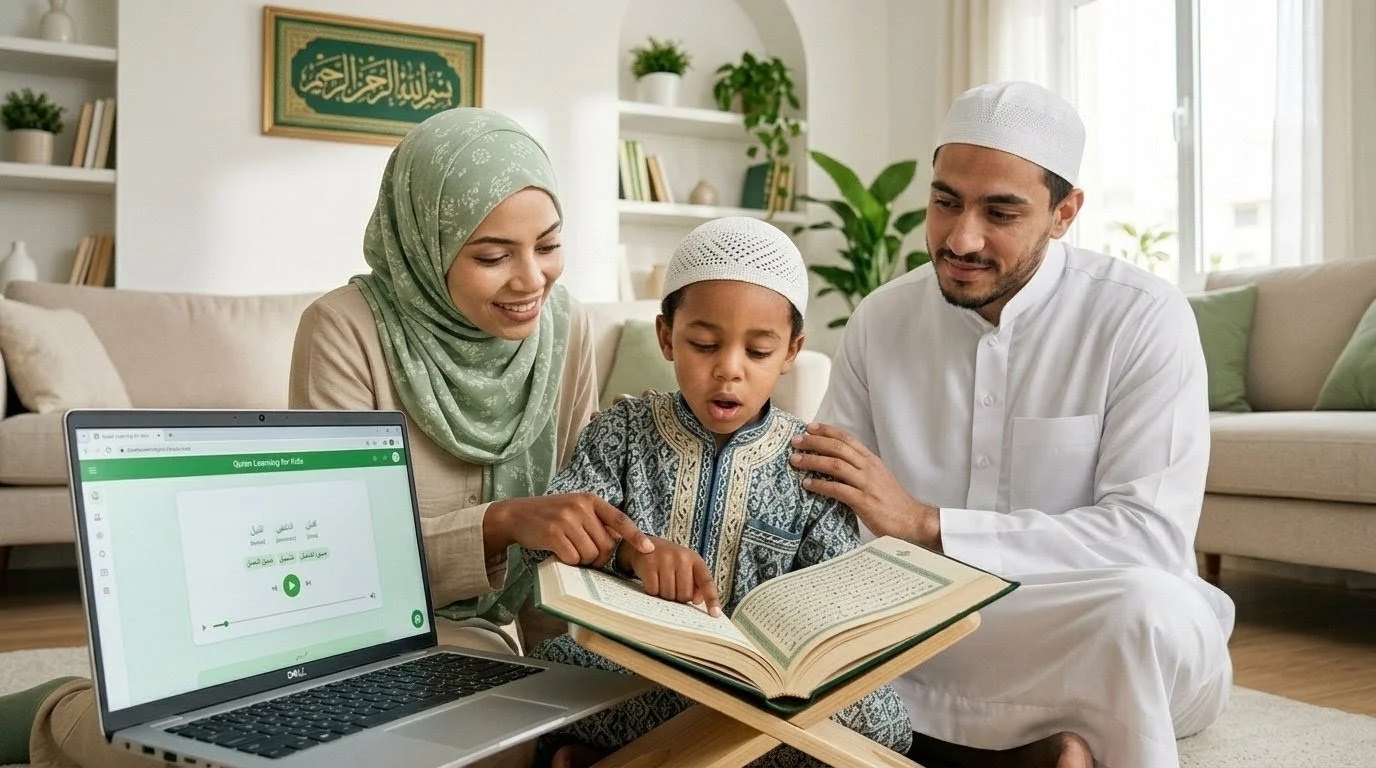
When is the best time for children to start learning the Quran? The best time is when learning feels enjoyable and natural. Children who connect the Quran with love, kindness, and encouragement are often more motivated to continue learning as they grow. For many parents, helping their children build a strong relationship with the Quran is one of the most important goals in life. The journey becomes much easier when children enjoy learning instead of feeling forced. Both Quran for kids and learn Quran for kids are more than simple search terms—they represent a parent’s hope to give their child a lifelong connection with Allah’s words.
With the right teaching method, patient guidance, and continuous encouragement, every child can develop confidence while reading and understanding the Quran.
Why Quran for Kids Should Begin at an Early Age
Childhood is the best time to build positive habits. During these early years, children absorb new information quickly and enjoy discovering new things. This makes it an excellent opportunity to introduce Quran for kids gently and enjoyably.
Learning the Quran at a young age does not mean expecting children to memorize many Surahs immediately. Instead, the goal is to make them feel comfortable listening to the Quran, recognizing Arabic letters, and becoming familiar with its beautiful words. Children who grow up hearing Quran recitation regularly often develop a natural love for it. As they become older, reading and memorization become easier because the sounds and rhythm already feel familiar.
Parents sometimes worry that their children are too young to begin. In reality, every child learns differently. Some children enjoy listening before speaking, while others become interested in recognizing letters first. The important thing is to introduce the Quran without pressure.
How Learn Quran For Kids Differs From Teaching Adults
Children and adults learn in very different ways. While adults can usually stay focused for longer periods and understand the purpose behind their studies, children learn best when lessons are enjoyable, interactive, and appropriate for their stage of development.
This is why programs designed to learn Quran for kids should never simply use the same teaching methods created for adults. A successful children’s program adapts the lesson structure, teaching style, and activities to match the child’s age, personality, and learning ability. At Taj Academy, our teachers understand that every age group learns differently. We design our Quran lessons to keep children engaged, motivated, and confident while helping them build a lifelong connection with the Quran.
Children Vs Adults In Quran Learning
The table below highlights some of the biggest differences between teaching children and teaching adults.
| Learning Area | Learn Quran For Kids | Adult Quran Learning |
|---|---|---|
| Learning Motivation | Children are motivated by fun activities, encouragement, and positive experiences. | Adults are usually motivated by personal goals, faith, and self-improvement. |
| Attention Span | Younger children learn best through short, varied activities that change regularly. | Adults can concentrate for longer lessons and more detailed explanations. |
| Teaching Style | Lessons include interaction, repetition, games, and simple examples to maintain interest. | Lessons often focus on explanation, discussion, and independent practice. |
| Learning Pace | Progress is adjusted according to the child’s developmental stage and confidence level. | Adults often manage a faster pace and can study more independently. |
| Feedback Method | Teachers use praise and gentle encouragement to build confidence and motivation. | Adults usually prefer direct feedback and detailed correction. |
| Lesson Structure | Classes are divided into smaller sections with different activities to keep children engaged. | Lessons can follow a longer and more structured format without frequent changes. |
How Quran Lessons Change As Children Grow
Every stage of childhood requires a different learning approach. As children mature, their ability to understand, concentrate, and remember information also develops. Below are examples of how teaching methods can change with age.
| Child’s Age | Learning Approach |
| Around 5 Years Old | Children often respond best to colorful visuals, short learning activities, simple repetition, and plenty of encouragement. |
| Around 8 Years Old | Students usually become ready to read simple Arabic words, practice short Surahs, and participate in guided Quran activities. |
| Older Children | Lessons can become more structured, with regular revision, longer reading practice, and greater personal responsibility for learning. |
Why Short And Interactive Lessons Work Best
Children naturally become distracted when lessons continue for too long without variety. Instead of expecting young learners to sit through long classes, experienced teachers divide each lesson into smaller, engaging sections.
A typical lesson may include reading practice, pronunciation exercises, teacher interaction, review activities, and positive feedback, allowing children to stay focused without feeling overwhelmed. This approach keeps learning enjoyable while helping children make steady progress.
At Taj Academy, we believe that successful learn Quran for kids programs are built around the child’s needs—not the teacher’s schedule. When lessons are engaging, age-appropriate, and encouraging, children are more likely to enjoy learning, stay motivated, and develop a lasting love for the Quran.
The First Goal Is to Build Love Before Memorization
For many parents, Quran memorization online is the ultimate goal. While memorizing the Quran is a remarkable achievement, it should never come at the expense of a child’s love for learning. Before children can develop a lifelong relationship with the Quran, they need to enjoy the journey of discovering it.
Think about two children. One memorizes several Surahs quickly but approaches every lesson with stress and anxiety. The other learns at a slower pace yet eagerly waits for each class because the experience feels positive and encouraging.
As the years pass, the difference becomes clear. The child who associates the Quran with joy and support is far more likely to continue learning, while the one who experiences constant pressure may gradually lose motivation. Positive experiences inspire consistency, and consistency leads to lasting progress.
When children connect the Quran with kindness, encouragement, and a sense of accomplishment, they naturally want to spend more time with it. This strong emotional bond not only makes learning more enjoyable but also creates a solid foundation for meaningful memorization in the future. For this reason, experienced Quran teachers often focus on nurturing a child’s love for the Quran before increasing the amount of memorization. Once that love is firmly established, memorization becomes a more natural, enjoyable, and sustainable part of the learning process.
Why Every Child Learns At A Different Speed
One of the most important things parents can understand is that no two children learn the Quran in the same way. Every child develops different skills at a different pace, and this is a normal part of the learning process.
It can be tempting to compare your child’s progress with that of siblings, cousins, classmates, or friends.
“My nephew has already memorized ten Surahs.”
“My neighbor’s daughter reads much faster.”
Although these comparisons are common, they rarely help children grow. In fact, they may create unnecessary pressure that reduces confidence and makes learning feel like a competition instead of a rewarding spiritual journey. Programs designed to learn Quran for kids should recognize that each child has unique strengths and provide support that matches their individual needs.
At Taj Academy, our teachers focus on helping every child achieve steady personal progress rather than comparing students with one another.
Every Child Has Different Learning Strengths
Children often develop different Quran learning skills at different times. Excelling in one area does not mean a child will progress at the same speed in every other area.
The table below shows some common differences that teachers see among young learners.
| Learning Strength | What It May Look Like |
|---|---|
| Confident Reader | Enjoys reading aloud early but may need additional time to memorize new Surahs. |
| Strong Memorizer | Learns verses quickly but continues practicing pronunciation for greater accuracy. |
| Careful Listener | Prefers listening and observing before feeling ready to read independently. |
| Thoughtful Learner | Progresses more slowly at first but builds a solid understanding through consistent practice. |
| Interactive Learner | Learns best by asking questions, participating in discussions, and practicing with the teacher. |
| Independent Reviewer | Enjoys revising previous lessons regularly, leading to strong long-term retention. |
Why Comparing Children Can Slow Progress
When children feel that they are constantly being measured against others, they may begin to focus more on keeping up than on truly learning. Supportive encouragement usually produces much better results than comparison.
Parents who celebrate small improvements—whether it is recognizing a new Arabic letter, reading a verse more confidently, or memorizing a short Surah—help their children develop a positive attitude toward Quran learning. This confidence encourages children to keep practicing, even when they face challenges.
Measuring Success The Right Way
Rather than asking, “Is my child learning faster than others?” a more helpful question is, “Is my child making progress compared to last month?”
The table below shows healthier ways to measure Quran learning.
| Instead Of Comparing… | Focus On… |
| Number of Surahs memorized by other children | Your child’s personal improvement over time |
| Reading speed compared with classmates | Accuracy, confidence, and understanding |
| Completing lessons before everyone else | Consistent attendance and regular practice |
| Competing with family or friends | Developing a lifelong love for the Quran |
| Perfect performance | Continuous effort and gradual improvement |
Every Step Forward Matters
Successful Quran education is not about reaching the finish line first. It is about helping every child build confidence, strengthen their relationship with the Quran, and continue learning with enthusiasm.
At Taj Academy, our teachers adapt lessons to each student’s abilities and learning style, ensuring that children receive the guidance and encouragement they need to progress at a pace that is right for them. When children are given time to grow without unnecessary pressure, they often become more confident learners who enjoy returning to their Quran lessons week after week.
Creating Positive Memories Around Learning Quran for kids
Children often remember how an experience made them feel more than the details of what they learned. That is why creating positive memories around Quran learning plays a vital role in developing a lifelong connection with the Quran.
Think about your own childhood. You may not remember every lesson you studied at school, but you probably remember the teachers who encouraged you, inspired your confidence, or made learning enjoyable. The same principle applies to Quran education. When children associate the Quran with positive emotions, they are more likely to stay motivated and engaged.
Simple, everyday moments can make a lasting difference, such as:
- Reading the Quran together before bedtime, creating a peaceful and comforting family routine.
- Listening to Quran recitation during family trips, allowing children to hear the Quran in a relaxed and enjoyable setting.
- Celebrating small milestones, whether it is memorizing a new verse or improving their recitation, to reinforce a sense of achievement.
- Praising effort rather than perfection, helping children understand that consistent progress matters more than flawless performance.
- Showing genuine happiness when they improve, as a smile or a few encouraging words can boost their confidence and enthusiasm.
Over time, these meaningful experiences help children see the Quran as a natural and cherished part of everyday family life rather than just another subject to study. As a result, they develop a stronger emotional connection with the Quran—one that encourages consistent learning and lasts well into adulthood.
Why Short Daily Practice Works Better Than Long Weekly Sessions
Many parents believe that longer study sessions lead to better results. However, when it comes to Quran learning, consistency is often far more effective than the amount of time spent in a single lesson.
Consider the difference between these two approaches:
- Child A studies the Quran for two hours every Saturday. While each session is productive, the long gap between lessons can make it difficult to retain what was learned and maintain momentum.
- Child B spends just fifteen minutes each day reading or memorizing the Quran. Although each session is shorter, the daily routine reinforces learning, strengthens memory, and makes Quran study a natural part of everyday life.
In many cases, the second approach leads to better long-term results because regular practice helps children build lasting habits instead of relying on occasional intensive sessions.
Short daily lessons also reduce the risk of fatigue and frustration. Rather than feeling overwhelmed by long study periods, children can stay focused, enjoy steady progress, and remain motivated to continue learning.
Even reading or memorizing a few verses each day can gradually build confidence, improve retention, and strengthen a child’s connection with the Quran over time.
The Importance of Choosing the Right Method For learn quran for Kids
Every child has a unique way of learning, which is why a single teaching approach does not work for everyone. Understanding how a child learns best can make Quran education more enjoyable, effective, and rewarding.
For example, some children learn more easily by listening to repeated recitation, while others remember lessons better through visual materials such as colorful learning aids. Some children benefit from writing verses to strengthen their memory, whereas others stay engaged through interactive activities and hands-on exercises. By adapting lessons to each child’s individual learning style, teachers can create an environment where children feel confident, motivated, and eager to make steady progress.
At Taj Academy, we recognize that every child comes from a different background and learns at a different pace. Rather than following a one-size-fits-all approach, our experienced teachers design engaging, patient, and personalized lessons that match each student’s abilities. This supportive learning environment helps children build confidence, develop a genuine love for the Quran, and achieve consistent progress without unnecessary pressure.
Why Parents Are the First Teachers
While qualified teachers play an important role in Quran education, a child’s first and most influential teachers are their parents. Long before children attend their first Quran class, they begin learning by observing the habits and attitudes they see at home.
When children regularly see their parents reading the Quran, they naturally understand that it is an essential part of everyday life rather than an occasional activity. This example often leaves a deeper impression than words alone.
Parents do not need to give lengthy lectures to inspire their children. Instead, small, consistent actions can have a lasting impact, such as:
- Reading a few verses after Fajr, making Quran recitation part of the daily routine.
- Playing Quran recitation softly at home to help children become familiar with its beautiful sound.
- Sharing inspiring stories from the Quran, helping children connect with its lessons and values.
- Making dua together after Salah, encouraging children to see the Quran and worship as a natural part of family life.
These simple daily habits create a home environment where the Quran is present in everyday moments. Over time, they help children develop a deep emotional connection with the Quran that continues to grow throughout their lives.
How Quran for Kids Builds Strong Character From an Early Age
Parents often ask what the biggest benefit of Quran learning is.
Is it memorization?
Is it pronunciation?
Is it learning Arabic?
While all of these are valuable, one of the greatest gifts of the Quran is the character it helps build.
Children who grow up reading the Quran regularly begin to understand important values little by little. They learn about honesty, kindness, patience, respect, gratitude, and helping others. These lessons become easier to remember because they are connected to stories and verses that children hear again and again.
For example, instead of simply telling a child to be honest, parents can share the story of Prophet Muhammad (peace be upon him) and explain how truthfulness is one of the qualities loved by Allah. Over time, these small conversations help children understand that the Quran is not only something to read—it is also a guide for everyday life.
Why Encouragement Works Better Than Pressure in Quran Learning for Kids
Every parent hopes to see their child make steady progress in learning the Quran. While this goal is understandable, the way children are guided often has a greater impact than the speed of their progress. In most cases, encouragement inspires lasting growth, while constant pressure can reduce motivation.
Consider these two learning environments:
- In the first, every mistake is met with frustration or criticism, making the child feel anxious about participating.
- In the second, mistakes are viewed as a natural part of the learning process, and each correction is given with patience and encouragement.
The outcome is usually clear. Children who feel supported are far more likely to read aloud with confidence, ask questions without fear, and continue practicing even when they find something difficult.
As children experience small successes and receive positive reinforcement, their confidence gradually grows. Over time, that confidence becomes the foundation for stronger Quran reading skills, successful memorization, and accurate Tajweed.
Helping Children Stay Consistent Even During Busy School Days
Balancing school, homework, extracurricular activities, and family responsibilities can make it difficult to find time to learn the Quran. As a result, some parents postpone lessons, hoping to return to them when life becomes less busy.
In reality, busy schedules make consistent routines even more valuable. Rather than waiting for long periods of free time, successful families focus on creating small but regular opportunities for Quran learning throughout the day.
Simple routines can include:
- Spending five minutes with the Quran after Fajr to begin the day with a meaningful habit.
- Reading one page after Maghrib, making Quran study part of the evening routine.
- Reviewing the previous day’s lesson before bedtime to strengthen retention and reinforce learning.
- Listening to Quran recitation while traveling, turning everyday moments into valuable learning opportunities.
Although these sessions are short, their impact grows over time. A few consistent minutes each day are often more effective than a single long lesson once a week. By making the Quran a regular part of daily life, children develop lasting habits that support continuous learning and steady progress throughout the year.
How Stories Make Learn Quran For Kids More Meaningful
Children are naturally drawn to stories. Long before they can understand detailed explanations, they learn through characters, events, and meaningful experiences. This is one of the many reasons why the Quran includes the inspiring stories of the Prophets, allowing children to discover important values through real examples.
When parents choose a program to learn Quran for kids, learning should go beyond memorizing verses. Children also benefit from understanding the lessons and values that the Quran teaches in a way that matches their age and level of understanding.
At Taj Academy, teachers help children appreciate the meanings behind Quranic stories by encouraging thoughtful discussion and simple explanations that make the lessons easier to understand and remember.
What Children Can Learn From Quranic Stories
The stories of the Prophets teach valuable life lessons that children can apply in their everyday lives.
| Quran Story | Value Children Can Learn | Everyday Example |
|---|---|---|
| Prophet Nuh (Noah) | Patience and perseverance | Continuing to do the right thing even when something feels difficult. |
| Prophet Ibrahim (Abraham) | Trust in Allah | Learning to rely on Allah during times of uncertainty or change. |
| Prophet Yusuf (Joseph) | Forgiveness, honesty, and good character | Treating others kindly even after disagreements and always telling the truth. |
| Prophet Musa (Moses) | Courage and determination | Facing challenges with confidence while trusting Allah’s guidance. |
| Prophet Yunus (Jonah) | Repentance and hope | Understanding that turning back to Allah is always possible after making mistakes. |
| Prophet Isa (Jesus) | Kindness and compassion | Showing mercy, respect, and care toward family members and friends. |
Why Stories Help Children Remember Better
Stories give children something meaningful to connect with. Instead of remembering information as isolated facts, they remember the people, events, and emotions connected to each lesson.
This makes Quran learning more engaging and helps children understand how Islamic values can guide their own behavior. When children hear the stories repeatedly, they gradually connect Quranic teachings with situations they experience at home, at school, and with friends.
Turning Story Time Into Family Learning
Quranic stories also create wonderful opportunities for parents and children to learn together. After reading or hearing a story, parents can ask simple questions that encourage children to think about what they have learned.
For example:
| Family Discussion Questions | Purpose |
| What did you like most about this story? | Encourages children to reflect on the events and characters. |
| What good lesson did you learn today? | Helps children identify the main value of the story. |
| How can we practice this lesson at home? | Connects Quranic teachings to everyday family life. |
| Which Prophet would you like to learn more about next? | Inspires curiosity and continued learning. |
| What would you have done in this situation? | Develops critical thinking and moral understanding. |
These conversations help children move beyond simply listening to a story. They begin to understand its message, ask thoughtful questions, and see how the Quran’s teachings can influence their daily lives.
Building A Lifelong Love For The Quran
When children associate learning the Quran with inspiring stories, meaningful conversations, and positive family experiences, they often develop a stronger emotional connection to the Quran.
Instead of viewing lessons as something they must complete, they begin to look forward to discovering new stories, learning valuable life lessons, and strengthening their relationship with Allah.
That is one of the reasons storytelling remains such an effective part of a successful learn Quran for kids journey—it nurtures both knowledge and character while making every lesson more memorable.
A Strong Foundation Begins With The Right Reading Method
Every child who learns to read the Quran starts with the same goal: building the skills needed to read accurately and confidently. Achieving that goal becomes much easier when children follow a structured learning method instead of trying to memorize letters and words without guidance.
For beginners, one of the most trusted and widely used approaches is Noor Al Bayan. Rather than overwhelming students with large amounts of information, the method introduces each new skill in a logical order. Children master one concept before moving to the next, creating steady progress and reducing confusion.
At Taj Academy, the Noor Al Bayan Arabic Course has been specially designed for children who are beginning their Quran reading journey. Every lesson builds on the previous one, helping students develop confidence while establishing strong reading habits that will support them throughout their future Quran studies.
What Makes Noor Al Bayan An Effective Reading Method?
The Noor Al Bayan approach focuses on developing essential reading skills gradually, allowing children to become comfortable with each stage before progressing further.
| Learning Stage | What Children Practice | Why It Matters |
|---|---|---|
| Recognizing Arabic Letters | Learning the shape and sound of every Arabic letter. | Gives children a strong foundation before reading complete words. |
| Connecting Letters | Understanding how letters change shape and join inside words. | Helps children transition smoothly from individual letters to complete words. |
| Correct Pronunciation | Practicing each letter with teacher guidance. | Builds accurate reading habits from the very beginning. |
| Reading Short Words | Combining previously learned skills to read simple Quranic words. | Develops confidence through gradual success. |
| Progressive Reading Practice | Reading increasingly longer words and sentences. | Prepares students for fluent Quran reading without unnecessary pressure. |
Why A Structured Method Builds More Confident Readers
Children often become discouraged when lessons move too quickly or introduce several new concepts at once. A structured reading program avoids this problem by allowing children to master one skill before adding another.
This steady progression helps students experience regular success, making each lesson feel achievable instead of overwhelming. As children notice their own improvement from week to week, they become more willing to participate, practice independently, and continue learning with enthusiasm.
Noor Al-Bayan Course At Taj Academy
The Noor Al-Bayan Course at Taj Academy is designed specifically for beginners and provides flexible learning options for families with different needs.
| Course Feature | Details |
| Program | Noor Al-Bayan Course for Beginners |
| Group Class Size | 2–4 students |
| Lesson Duration | 60 minutes per class |
| Monthly Learning Time | 12 instructional hours |
| Group Tuition | $40 per student per month |
| Private Program | 12 private sessions (12 hours) |
| Private Tuition | $80 for the complete program |
Preparing Children For Long-Term Quran Learning
Learning to read the Quran confidently is not about finishing lessons as quickly as possible. It is about building skills that will remain with children for years to come. A strong reading foundation makes future learning much easier, whether a child later begins memorizing Surahs, studying Tajweed, or developing a deeper understanding of the Quran.
At Taj Academy, our Noor Al-Bayan Course helps children develop these essential skills through patient instruction, structured lessons, and consistent practice. By progressing one step at a time, young learners gain the confidence they need to enjoy reading the Quran and continue growing throughout their Islamic education.