

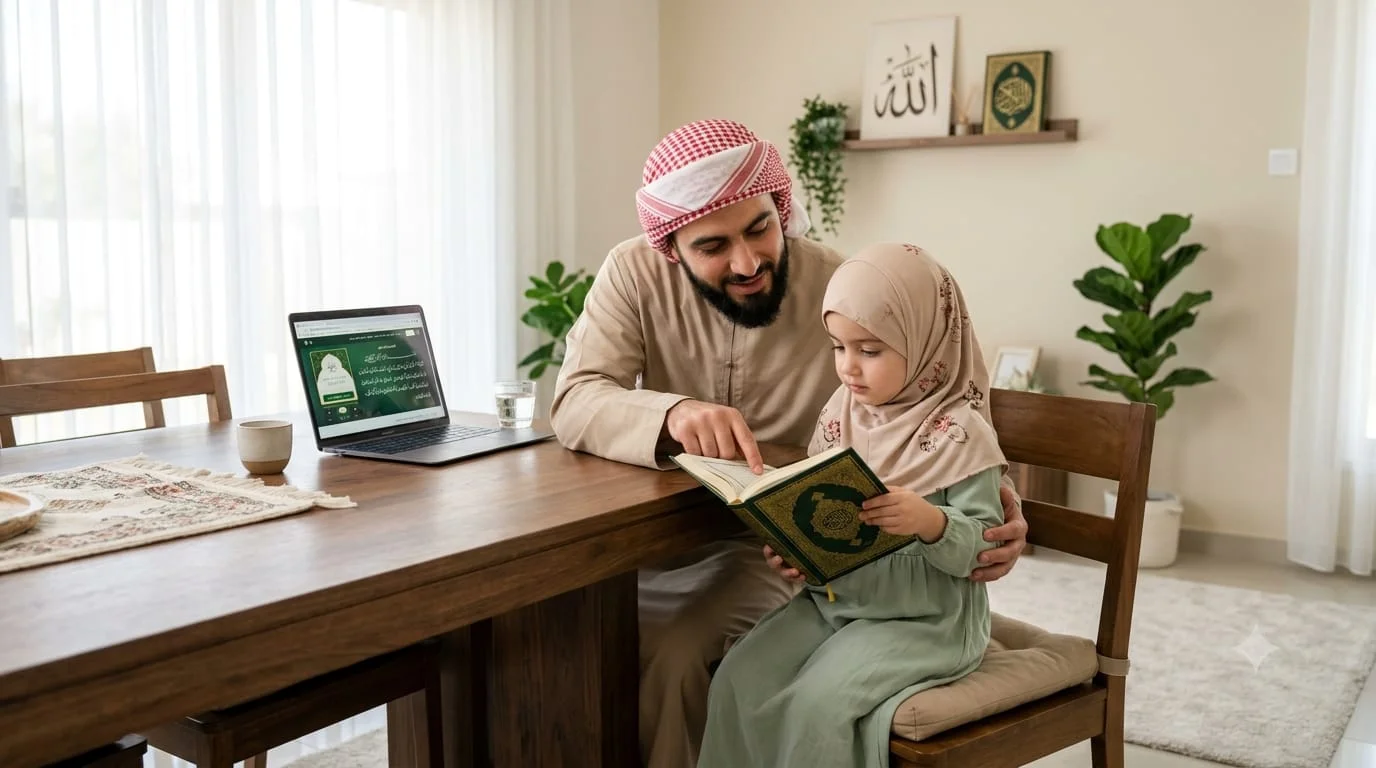
What is the most important thing parents should do before enrolling a child in Quran classes? Before choosing any class, parents should have honest conversations with themselves and with their child. These discussions help set realistic expectations, build excitement, and create a learning experience that lasts for years instead of only a few weeks.
Every parent wants the best for their child. When it comes to learning the Quran, many families spend time comparing teachers, schedules, and prices. While these details are important, they are not the first things parents should think about. The first step is having meaningful conversations that help everyone understand the purpose of learning the Quran and what the journey may look like. Children learn best when they feel supported instead of pressured. A child who understands why they are learning is often more motivated than a child who joins classes simply because someone told them to. Parents also benefit from these conversations because they become more prepared to encourage their children through every stage of learning.
At Taj Academy, we have worked with families from many countries and backgrounds. One thing we have learned is that children who begin their Quran journey with clear expectations and family support often stay engaged longer and enjoy learning more. This guide explores ten important conversations every parent should have before enrolling a child in Quran classes. These discussions are simple, practical, and based on situations that many families experience every day.
Conversation 1: Why Do We Want Our Child to Learn the Quran?
At first, this may seem like a simple question.
Many parents immediately answer, “Because every Muslim should learn the Quran.” While that is certainly true, taking a moment to reflect on why you want your child to learn the Quran can help shape a much more meaningful learning journey.
Before choosing a Quran program, ask yourself a few important questions:
- What do I hope my child will gain from learning the Quran?
- Do I want them to develop a genuine love for the Quran, or simply complete their lessons?
- Is my goal limited to memorization, or do I also want them to understand its meaning and build strong Islamic character?
- How can Quran learning become a natural part of our daily family life?
Every family will have its own priorities, and there is no single “right” answer.
Some parents want their children to read the Quran with confidence and correct pronunciation. Others hope their children will memorize short Surahs, while many simply want to nurture a lifelong connection with Allah from an early age.
Whatever your goal may be, the most important step is identifying it before selecting a learning program. When parents have a clear purpose, it becomes much easier to choose classes and teaching methods that truly match their child’s needs instead of simply following what others are doing.
Turning Goals Into Everyday Habits
Setting meaningful goals is only the beginning. Those goals become truly valuable when they are reflected in your family’s daily routine.
Simple habits can make a lasting difference, such as:
- Reading a few verses together after Maghrib.
- Discussing one lesson or value from a Surah each week.
- Encouraging your child to ask questions and explore what they learn.
- Celebrating consistent effort and progress instead of focusing only on speed or memorization.
These small, consistent moments help children see that learning the Quran is much more than attending a weekly class. It becomes a natural part of family life—one that strengthens faith, builds character, and creates lasting memories together.
Conversation 2: Is Our Child Ready to Start Quran Classes?
One of the most common questions parents ask is, “When is the right time for my child to start learning the Quran?” The truth is that there is no single age that works for every child.
Every child develops at their own pace. Some are ready to enjoy structured Quran lessons as early as four years old, while others may benefit from waiting another year until they feel more comfortable learning in a classroom or online setting.
A child’s readiness depends on much more than age. It also involves their overall development, including:
- Their attention span.
- Their emotional confidence.
- Their interest in learning.
- Their ability to follow simple instructions.
- Their willingness to communicate with a teacher.
It’s natural for parents to compare siblings or children of a similar age. You might think, “My older child started Quran classes at five, so my younger child should do the same.” However, every child has a unique personality, learning style, and pace of development.
One child may eagerly read aloud from the very beginning, while another may need more time and encouragement before feeling confident enough to participate. Respecting these individual differences creates a positive learning experience and helps children develop a genuine love for learning the Quran instead of feeling pressured.
Signs That Your Child Is Ready
Rather than focusing only on age, look for signs that your child is emotionally and developmentally prepared to begin Quran classes.
Many children are ready when they:
- Enjoy listening to stories.
- Can focus on an activity for short periods.
- Show curiosity about Arabic letters or Quran books.
- Enjoy repeating new words and sounds.
- Feel comfortable interacting with adults or teachers.
These developmental milestones are often far more important than reaching a particular birthday. Starting Quran classes when your child is truly ready can make learning more enjoyable, build confidence, and lay the foundation for a lifelong connection with the Quran.
Conversation 3: How Does My Child Learn Best?
Every child learns differently, and understanding your child’s learning style can make Quran learning more enjoyable and effective.
Imagine two children. One loves colorful pictures, visual demonstrations, and interactive activities. The other prefers listening carefully and repeating words aloud until they remember them. Although both children are capable of learning the Quran, they may not respond equally well to the same teaching approach.
This is why choosing a learning method that matches your child’s personality and strengths is so important. Many children learn best through one or more of the following approaches:
- Listening to their teacher and repeating what they hear.
- Watching visual examples and demonstrations.
- Reading words and sentences independently.
- Writing letters and practicing exercises.
- Participating in interactive games and hands-on activities.
An experienced Quran teacher understands that every child is unique. Instead of expecting all students to learn in exactly the same way, they adapt their teaching methods to suit each child’s individual needs and learning pace.
Why Learning Style Matters
When children enjoy the way they learn, they are more likely to stay motivated and look forward to each lesson. Learning becomes an enjoyable part of their routine rather than something they feel pressured to complete.
As a parent, you can discover valuable clues about your child’s learning style simply by observing them at home. Consider questions such as:
- Does your child enjoy looking through books?
- Do they ask lots of questions?
- Do they enjoy hands-on activities and games?
- Do they remember things better after hearing them several times?
- Do they like drawing, writing, or recognizing patterns?
The answers to these questions can help you choose Quran classes and teaching methods that match your child’s natural way of learning, creating a more positive and rewarding experience from the very beginning.
Conversation 4: What Do We Expect From Quran Classes?
Before your child begins Quran classes, it’s helpful to ask a simple but important question: What does success look like for our family?
Parents and children often have different expectations. As parents, it’s natural to hope your child will make steady progress, memorize Surahs, or improve their Quran reading skills. Children, however, may have very different thoughts. Some are excited to learn something new, while others hope to make friends or simply feel comfortable with their teacher. Some may even feel nervous because they are afraid of making mistakes.
Having an open conversation before classes begin helps everyone develop realistic expectations and creates a more positive learning experience.
Success Is More Than Memorization
Many parents naturally focus on completing lessons or memorizing as much of the Quran as possible. While these are valuable goals, success can take many different forms—especially during the early stages of learning.
For many children, success may mean:
- Feeling confident reading Quran aloud.
- Looking forward to each lesson.
- Improving pronunciation step by step.
- Asking questions without feeling embarrassed.
- Building a consistent daily Quran routine.
These small achievements often become the foundation for greater progress over time. When children enjoy learning and feel encouraged, they are much more likely to stay motivated and continue their Quran journey with confidence.
Short-Term Goals vs. Long-Term Success
It’s easy to focus on immediate results, especially when comparing your child’s progress with others. However, lasting success usually comes from thinking beyond today’s lesson.
A short-term approach often focuses on:
- Finishing lessons as quickly as possible.
- Memorizing large amounts in a short time.
- Comparing one child’s progress with another.
A long-term approach, on the other hand, focuses on:
- Building confidence.
- Developing consistent learning habits.
- Nurturing a genuine love for the Quran.
- Creating lifelong Islamic values and routines.
While short-term achievements can be encouraging, long-term habits are what truly shape a child’s relationship with the Quran. When learning is enjoyable, consistent, and meaningful, children are far more likely to continue growing in knowledge and faith for years to come.
Why Choosing The Right Learning Environment Matters
When parents choose a Quran program, they often focus on the curriculum, class schedule, or tuition fees. While these factors are important, the learning environment can have an even greater influence on a child’s experience.
Children spend many hours with their teachers, and those experiences shape how they feel about Quran learning. A positive environment helps children look forward to each lesson, while an uncomfortable one may reduce enthusiasm, even if the teaching material is excellent.
That is why parents should look beyond advertisements and ask practical questions before enrolling their child.
Questions Every Parent Should Ask
Choosing the right learning environment means understanding how children are treated during lessons, not just what they will study.
| Question | Why It Matters |
|---|---|
| Is the teacher patient with beginners? | Patient teachers give children time to understand new concepts without feeling rushed. |
| Do children feel comfortable asking questions? | A welcoming classroom encourages curiosity and helps children learn with confidence. |
| Are lessons adapted to different learning needs? | Flexible teaching allows every child to make steady progress according to their abilities. |
| Does the teacher encourage effort as well as achievement? | Recognizing improvement motivates children to continue learning, even when lessons become challenging. |
| How does the teacher respond to mistakes? | Respectful guidance helps children view mistakes as opportunities to improve rather than something to fear. |
| Is communication with parents encouraged? | Regular feedback helps parents understand their child’s progress and support learning at home. |
The Environment Shapes More Than Academic Progress
A good learning environment teaches more than reading skills.
Children also learn important habits such as listening respectfully, practicing consistently, showing patience, and treating others with kindness. When these values are part of every lesson, Quran education supports both knowledge and character development.
Parents often notice that children who enjoy their learning environment are more willing to review lessons at home, participate actively in class, and maintain a positive attitude toward learning over time.
What A Supportive Quran Classroom Looks Like
The best Quran classrooms share several important qualities that help children feel secure and motivated.
| Positive Classroom Quality | Benefit For Children |
|---|---|
| Respectful communication | Children feel valued and are more willing to participate. |
| Clear lesson expectations | Students know what they will learn and what is expected during each class. |
| Consistent routines | Familiar lesson structures help children feel comfortable and prepared. |
| Constructive feedback | Teachers explain how to improve instead of focusing only on errors. |
| Positive encouragement | Celebrating effort helps children stay motivated throughout their learning journey. |
| A welcoming atmosphere | Children associate Quran learning with positive experiences that encourage long-term commitment. |
Creating A Place Where Children Love To Learn
At Taj Academy, we believe that successful Quran education begins with creating an environment where children feel respected, supported, and understood.
Our teachers strive to build positive relationships with every student, creating lessons where children feel safe to participate, ask questions, and continue improving without fear of embarrassment. When mistakes are treated as natural learning opportunities instead of failures, children develop resilience, curiosity, and a genuine love for learning the Quran. That positive experience often becomes the foundation for a lifelong relationship with Allah’s Book.
Finding a Trusted Quran Academy
Choosing the right Quran academy is one of the most important decisions parents can make during their child’s Quran learning journey. The right learning environment can inspire confidence, encourage consistency, and help children develop a lifelong connection with the Quran.
A high-quality Quran academy offers much more than regular classes. It provides a structured learning experience that supports both academic progress and personal development.
When evaluating a Quran academy, look for features such as:
- Qualified and experienced Quran teachers
- A clear and well-organized learning curriculum
- Regular progress updates and constructive feedback
- A supportive and encouraging learning environment
- Age-appropriate teaching methods that match each child’s abilities
Before making a decision, it’s worth taking the time to ask questions, attend a trial lesson if one is available, and observe how teachers communicate with their students. A teacher’s patience, kindness, and ability to motivate children often have a greater influence on their learning experience than any textbook or curriculum.
Ultimately, the best Quran academy is one that helps children enjoy learning, develop strong Quran reading skills, and build good Islamic character. When children feel supported, encouraged, and excited to learn, they are far more likely to make steady progress and establish a lasting relationship with the Quran.
Conversation 5: Should We Choose Online Or In-Person Quran Classes?
One of the most important decisions parents make is choosing how their child will learn the Quran. Years ago, this decision was easy because most families only had access to local Quran classes at nearby mosques or Islamic centers.
Today, parents have another excellent option: Online Quran Memorization Program. Both online and in-person learning can help children build strong Quran reading skills. The key is not deciding which format is universally better, but determining which one best fits your child’s personality, your family’s routine, and the quality of the teaching.
A child who enjoys learning from the comfort of home may thrive in online lessons, while another child may prefer attending a local classroom with classmates.
Instead of asking, “Which option is better?”
A more helpful question is, “Which learning environment will help my child stay motivated and learn consistently?”
Online Quran Classes Vs In-Person Quran Classes
The following comparison highlights the strengths of both learning options.
| Feature | Online Quran Classes | In-Person Quran Classes |
|---|---|---|
| Location | Learn from home using a computer or tablet. | Students travel to a mosque, Islamic center, or Quran school. |
| Scheduling | Flexible lesson times that fit family routines. | Classes usually follow fixed schedules. |
| Teacher Selection | Families can choose from qualified teachers in different countries. | Choice depends on local teacher availability. |
| Travel | No commuting required. | Parents need to arrange transportation. |
| Learning Environment | Familiar surroundings may help some children feel more relaxed. | Classroom setting may help children who enjoy learning outside the home. |
| Social Interaction | Interaction takes place with teachers and classmates online. | Children meet classmates face-to-face and participate in classroom activities. |
Benefits Of Online Quran Classes
Online learning has become increasingly popular because it offers flexibility without compromising educational quality. For many families, learning from home saves valuable time and makes it easier to maintain a regular Quran schedule.
Some of the biggest advantages include:
| Advantage | Benefit For Families |
| No Travel Time | More time can be spent learning instead of commuting. |
| Flexible Scheduling | Parents can choose lesson times that fit school, work, and family commitments. |
| Access To Qualified Teachers | Families are not limited to teachers available in their local area. |
| Comfortable Home Environment | Many children feel more relaxed and confident learning in familiar surroundings. |
| Consistent Attendance | Weather, traffic, and transportation problems are less likely to interrupt lessons. |
Things To Consider Before Choosing Online Learning
Online learning works best when families create a suitable study environment.
Parents can support younger children by preparing the learning space before each lesson.
| Consideration | Helpful Tip |
| Internet Connection | Use a stable internet connection to avoid interruptions. |
| Study Space | Choose a quiet room with minimal distractions. |
| Device Preparation | Test the camera, microphone, and internet before class begins. |
| Parental Support | Younger children may benefit from occasional assistance during lessons. |
| Regular Routine | Keeping the same lesson time each week helps children develop consistent study habits. |
Benefits Of In-Person Quran Classes
Traditional classroom learning continues to be an excellent choice for many families. Some children enjoy leaving home, interacting directly with teachers, and learning alongside other students.
| Advantage | Benefit For Children |
| Face-to-Face Teaching | Teachers can provide immediate guidance during class activities. |
| Learning With Classmates | Children develop friendships and enjoy shared learning experiences. |
| Structured Classroom Routine | Regular schedules help some students stay organized and focused. |
| Community Connection | Local classes often help children feel connected to their mosque or Islamic community. |
Challenges Families Should Think About
Every learning format has practical considerations.
Understanding them in advance helps parents choose the option that fits their family’s lifestyle.
| Online Learning | In-Person Learning |
| Requires reliable internet access. | Requires regular travel to class. |
| Younger children may occasionally need parental assistance. | Fixed schedules may not suit busy families. |
| A quiet learning space is important. | Qualified teachers may not always be available nearby. |
| Screen-based learning may require short breaks for younger students. | Traffic and transportation can affect attendance. |
How To Decide Which Option Is Best
Rather than choosing based on convenience alone, parents should consider several practical questions.
- Does my child learn better at home or in a classroom?
- Can we maintain regular attendance every week?
- Is the teacher experienced in teaching children?
- Will this schedule fit comfortably with school and family responsibilities?
- Does my child feel happy, engaged, and motivated during lessons?
The answers to these questions often provide a clearer picture than comparing online and in-person learning in general.
Consistency Is More Important Than Location
Whether a child learns online or attends classes in person, long-term success depends on consistency.
A high-quality lesson attended every week will usually produce better results than an excellent program that children attend only occasionally.
At Taj Academy, our online Quran classes are designed to give families flexibility while maintaining the personal guidance, structured learning, and supportive teaching that children need to build confidence and develop a lifelong connection with the Quran.
In the end, the best choice is not simply online or in person—it is the option that allows your child to learn regularly, enjoy the experience, and continue making steady progress year after year.
Conversation 6: How Much Time Can Our Family Realistically Commit?
Many parents begin their child’s Quran journey with excitement and the best of intentions. They schedule several lessons each week and create ambitious study plans, hoping to see rapid progress.
However, everyday life quickly takes over. Work becomes busier, school assignments increase, and family responsibilities change. Before long, Quran lessons are postponed or skipped altogether.
For this reason, it’s worth asking one honest question before enrolling:
“What schedule can our family realistically maintain for the long term—not just for the first few weeks?”
The key to successful Quran learning is consistency, not intensity. A child who studies regularly each week is likely to make better long-term progress than one who studies for many hours only occasionally.
Building a Practical Weekly Routine
A simple and realistic routine is often the easiest one to maintain. For many families, that might include:
- One or two live Quran lessons each week.
- 10–15 minutes of daily revision.
- Listening to Quran during car rides or family travel.
- Reading together on weekends.
These small habits may seem simple, but when practiced consistently, they create meaningful progress over time.
Conversation 7: What Is Our Role as Parents After the Lesson Ends?
A common misconception is that once the lesson is over, the teacher is responsible for everything else. In reality, successful Quran learning is a partnership between the teacher and the family.
A weekly lesson provides guidance, but what happens between lessons often has the greatest impact. Children need encouragement, support, and opportunities to practice at home.
Parents don’t need to become Quran teachers. Their role is simply to stay involved and show that learning the Quran is an important part of family life.
Even small conversations can make a difference, such as asking:
- What did you learn today?
- Can you read your favorite verse for me?
- What did you enjoy most about today’s lesson?
Questions like these encourage children to reflect on what they’ve learned and remind them that their progress matters.
Supporting Without Taking Over
There is an important balance between supporting your child and placing unnecessary pressure on them.
Helpful ways to encourage learning include:
- Praising effort rather than perfection.
- Asking your child to explain what they learned.
- Spending a few minutes reviewing together.
- Celebrating steady progress.
At the same time, it’s helpful to avoid habits such as:
- Comparing siblings or classmates.
- Correcting every small mistake.
- Expecting perfection.
- Relying only on rewards to encourage learning.
Children who feel supported rather than pressured usually become more confident and motivated learners.
Talking About Mistakes Before They Happen
Every child will make mistakes while learning the Quran. Some may forget verses, confuse similar Arabic letters, or lose focus during a lesson. These moments are a natural part of the learning process. Instead of creating fear around mistakes, help your child understand that they are opportunities to improve.
Rather than saying: “You must never make mistakes.”
Try saying: “Everyone learns by practicing.”
This simple change in language helps children develop confidence, ask more questions, and approach learning with a positive mindset.
Helping Children Build Confidence Step by Step
Confidence doesn’t appear overnight. It grows through many small achievements that gradually build a child’s belief in their own abilities.
Celebrate milestones such as:
- Reading a verse correctly.
- Recognizing a new Arabic letter.
- Completing a short Surah.
- Answering a question with confidence.
Parents often focus on major accomplishments, but experienced teachers know that small successes are what lead to bigger goals.
Why Every Child Needs Positive Feedback
Children remember words of encouragement long after a lesson ends. Positive feedback helps build confidence and motivates them to keep learning.
Simple phrases can have a lasting impact, including:
- “I’m proud of how hard you worked today.”
- “You didn’t give up.”
- “I noticed your reading has improved.”
- “You’re becoming more confident every week.”
Offering encouragement doesn’t mean ignoring mistakes. It means recognizing effort while gently guiding your child toward continued improvement.
Creating a Home Where the Quran Feels Natural
Children learn as much from what they see as from what they are told. When parents regularly read the Quran or make it part of everyday family life, children naturally begin to value it as well.
Simple family habits can make a lasting difference, such as:
- Reading together after Maghrib.
- Listening to Quran while preparing meals.
- Discussing one lesson from a Surah each week.
- Making dua together after Salah.
These moments help children understand that the Quran is not limited to lesson time—it is a meaningful part of everyday life.
Choosing a Program That Grows With Your Child
As children grow, their learning needs naturally change. A six-year-old beginner requires a different approach than a child who is ready for Tajweed or memorization.
The best Quran programs adapt to each student’s stage of development, allowing children to progress at a comfortable and achievable pace.
A well-structured program should support students as they move from:
- Learning the Arabic alphabet.
- Improving Quran reading skills.
- Developing accurate pronunciation.
- Studying Tajweed.
- Beginning Quran memorization when they are ready.
This gradual progression helps children continue learning with confidence instead of feeling overwhelmed.
Preparing Children for Future Quran Goals
When parents enroll their child in Quran classes, it’s easy to focus only on the first lesson. However, the most rewarding journeys are built with long-term growth in mind.
Today’s beginner may become a confident Quran reader in the future. As their skills develop, they may choose to strengthen their recitation by Tajweed course online, improve their understanding of Quranic pronunciation, or begin memorizing Surahs at their own pace.
Every child follows a different path, and there is no single definition of success. For some, the goal is fluent daily recitation. For others, it may be Quran memorization or a deeper understanding of Tajweed. The most important step is giving children a strong and enjoyable beginning. With the right guidance, consistent support, and a positive learning environment, they can continue building their relationship with the Quran for many years to come.
Conversation 8: Should Our Child Focus on Reading, Tajweed, or Memorization First?
One of the most common questions parents ask is, “What should my child learn first—Quran reading, Tajweed, or memorization?” The answer isn’t the same for every child. It depends on their current abilities, confidence, and stage of learning.
Rather than rushing into memorization or advanced Tajweed, it’s important to build a strong foundation first. Just like building a house, every stage supports the one that follows.
A house cannot have a strong roof without solid walls, and strong walls cannot stand without a solid foundation. Quran learning follows the same principle. Children need to recognize Arabic letters, read comfortably, and gain confidence before moving on to more advanced skills.
When the foundation is strong, every future step becomes easier, more enjoyable, and more successful.
A Natural Learning Journey
Although every child progresses at their own pace, many follow a learning path similar to this:
- Learning the Arabic alphabet.
- Reading simple words and short phrases.
- Reading short Surahs with confidence.
- Improving pronunciation through Tajweed.
- Memorizing selected Surahs.
- Continuing with more advanced Quran studies.
Some children move through these stages quickly, while others need more time and practice. Both journeys are completely normal.
Avoid Comparing Progress
It’s easy to compare your child’s progress with siblings, friends, or classmates. However, every child learns differently and develops confidence at their own pace. Instead of asking, “Why isn’t my child memorizing as quickly as others?”, consider questions like:
- Is my child becoming a more confident reader?
- Are they enjoying their Quran lessons?
- Are they building good learning habits?
- Is their pronunciation improving over time?
These are often stronger indicators of long-term success than the number of Surahs memorized.
By allowing children to master each stage before moving to the next, parents help build a solid foundation that supports lifelong Quran learning. Steady progress, consistent practice, and a positive learning experience will always be more valuable than rushing through the journey.
Conversation 9: How Will We Measure Progress Without Creating Pressure?
Every parent wants to see their child make progress in learning the Quran. However, it’s important to remember that progress and pressure are not the same thing. When children feel encouraged instead of overwhelmed, they are more likely to develop confidence and enjoy learning.
Many parents naturally measure progress by numbers, such as:
- How many pages have been memorized?
- How many Surahs have been completed?
- How many mistakes were corrected?
While these milestones can be helpful, they don’t tell the whole story. True progress is often reflected in a child’s growing confidence, enthusiasm, and willingness to learn.
Signs of meaningful progress also include:
- Reading with greater confidence.
- Improving pronunciation over time.
- Developing a longer attention span.
- Looking forward to Quran lessons.
- Practicing at home without constant reminders.
Sometimes a child may memorize fewer verses than expected but become much more comfortable reading aloud. That kind of growth is just as valuable because it builds the foundation for future success.
Celebrate Improvement, Not Comparison
Comparing children with siblings or classmates can unintentionally create stress and reduce motivation. A child who constantly feels compared to others may begin to believe they are falling behind, even when they are making excellent progress.
Instead of comparing your child with someone else, compare today’s progress with yesterday’s.
Ask yourself questions like:
- Can my child recognize more Arabic letters than before?
- Do they feel more confident reading aloud?
- Are they participating more actively during lessons?
- Are they practicing with less encouragement from me?
These small improvements often reflect lasting development that cannot be measured by memorization alone.
By celebrating effort, consistency, and confidence, parents help children build a healthier and more enjoyable relationship with Quran learning.
Conversation 10: What Long-Term Relationship Do We Want Our Child to Have With the Quran?
This may be the most important question parents can ask themselves.
It’s easy to focus on the next lesson, the next Surah, or the next milestone. But the greatest goal of Quran education is not simply completing a course—it’s helping children build a lifelong relationship with the Quran.
Take a moment to imagine your child years from now and ask yourself:
- When my child is twenty years old, will they still choose to read the Quran?
- Will they enjoy spending time with it?
- Will they understand its value and guidance?
- Will they continue learning throughout their life?
Questions like these shift our focus from short-term achievements to lifelong habits and meaningful spiritual growth.
Looking Beyond Childhood
Children grow quickly. School becomes university, university becomes work, and life becomes increasingly busy. Yet the habits they develop during childhood often stay with them for many years.
That’s why it’s more valuable to build consistency than to chase perfection.
Simple, positive experiences—reading together, encouraging questions, celebrating progress, and making the Quran part of everyday family life—can leave a lasting impression that extends well into adulthood.
A child who grows up loving the Quran is far more likely to continue reading, reflecting on, and benefiting from it throughout life than a child who was only encouraged to finish lessons as quickly as possible.
In the end, the greatest success is not how quickly a child completes a program, but whether the Quran remains a trusted companion throughout their life. Every positive experience during childhood helps lay the foundation for that lifelong connection.
Common Mistakes Parents Make After Enrolling Their Child
Enrolling a child in classes of Quran for kids is an exciting milestone for many families. However, registration is only the beginning of the journey. What parents do at home after lessons can have a significant impact on how children feel about learning the Quran.
Most parents genuinely want their children to succeed. Yet, without realizing it, some everyday habits can make Quran learning feel stressful instead of enjoyable.
The good news is that these mistakes are easy to avoid once parents understand how children learn best.
Common Mistakes And Better Alternatives
The table below highlights some of the most common parenting mistakes after enrolling a child in Quran classes and offers more effective approaches.
| Common Mistake | Why It Can Be Harmful | A Better Approach |
|---|---|---|
| Expecting Immediate Results | Children may feel discouraged if they believe they must progress quickly. | Celebrate steady improvement and remember that lasting learning takes time. |
| Comparing Children | Comparisons can reduce confidence and make learning feel like a competition. | Focus on your child’s personal progress instead of comparing them with others. |
| Correcting Every Small Mistake | Constant interruptions may make children nervous about reading aloud. | Allow your child to finish reading, then gently correct the most important mistakes. |
| Skipping Revision | Without regular review, children may forget what they learned in previous lessons. | Set aside a few minutes each day to revise earlier material before moving forward. |
| Forgetting Encouragement | A lack of positive feedback can reduce motivation over time. | Praise effort, consistency, and improvement—not only perfect performance. |
Frequently Asked Questions (FAQs)
1. What is the best age to enroll a child in Quran classes?
There is no single perfect age, but many children are ready between the ages of 4 and 6. The best time depends on the child’s attention span, emotional readiness, and interest in learning rather than age alone. Starting with short, engaging lessons often leads to better long-term results.
2. Should my child learn to read the Quran before memorizing it?
In most cases, yes. Building strong reading skills first helps children pronounce words correctly and understand the structure of Quranic Arabic. Once they can read with confidence, memorization usually becomes easier and more accurate.
3. How can parents support their child outside Quran lessons?
Parents can encourage daily practice by reading together, listening to Quran recitation at home, asking children about what they learned, and praising their effort instead of focusing only on mistakes. Even 10–15 minutes of regular practice can make a significant difference.
4. Are online Quran classes effective for children?
Yes. Online Quran classes can be highly effective when they are taught by qualified teachers and include interactive lessons that match the child’s age and learning style. They also provide flexibility for families with busy schedules or those living in areas with limited access to Quran teachers.
5. What should parents look for when choosing a Quran academy?
Parents should look for qualified teachers, a structured curriculum, patient teaching methods, regular progress updates, and lessons that match their child’s age and ability. A supportive learning environment that builds confidence is often more valuable than simply choosing the fastest program.