

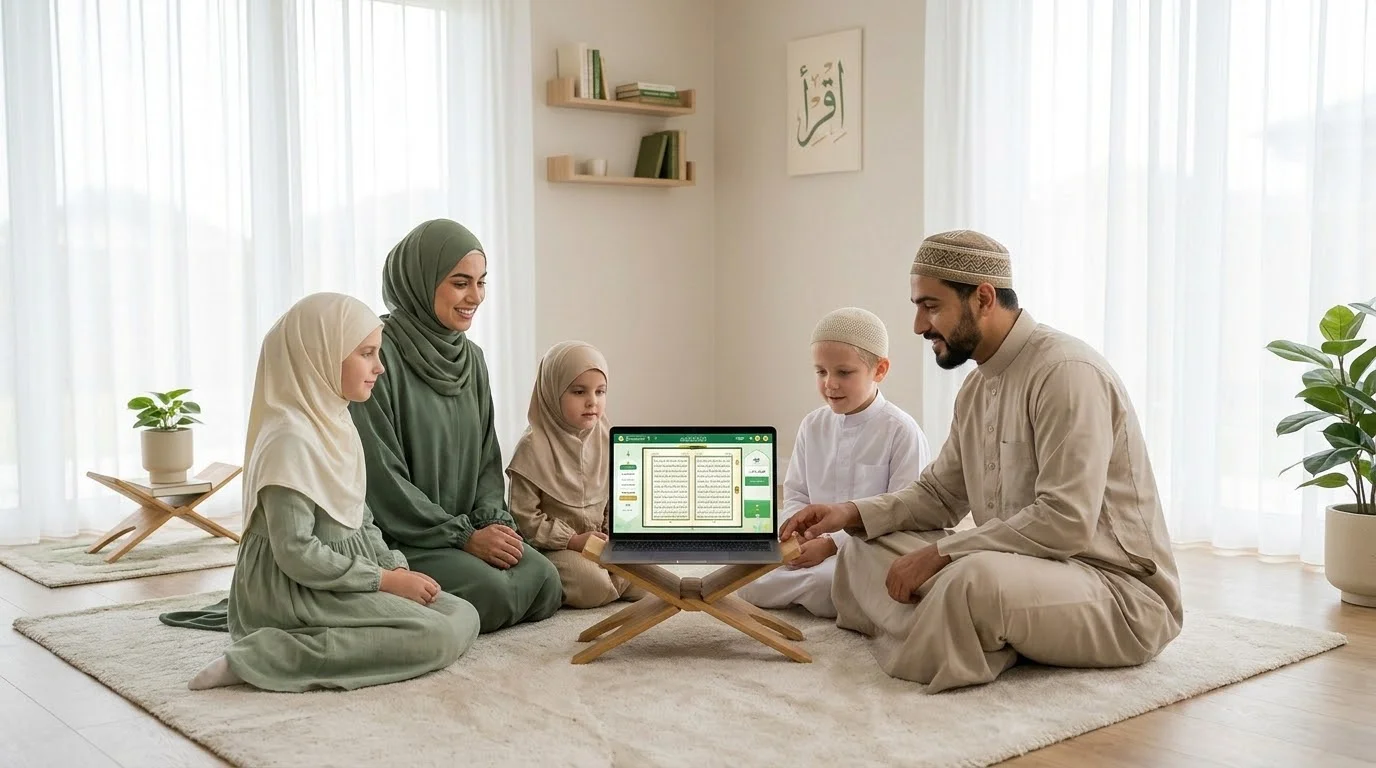
Teaching Quran for child is one of the greatest gifts parents can give. Today, teaching quran for child online allows children to learn from qualified teachers, practice regularly, and build a strong relationship with the Quran without leaving home. The key is choosing experienced teachers, following a structured plan, and making every lesson enjoyable.
Every Muslim parent dreams of seeing their child read the Quran with confidence and love. Whether you live in the USA, Canada, the UK, Australia, or Europe, finding the right way to begin teaching quran for child can feel overwhelming. Many parents ask whether online learning is effective, what age children should start, and how to keep them interested. This complete guide answers those questions using practical advice, real-life examples, and proven teaching methods.
You will also discover why many international families trust Taj Academy, where experienced Egyptian teachers who graduated from Al-Azhar University help children learn the Quran with patience, kindness, and professional guidance.
Why Teaching Quran For Child Should Start Early
Early childhood is one of the most valuable stages for introducing the Quran. During these years, children’s minds are highly receptive to new sounds, routines, and learning experiences. They enjoy repetition, ask many questions, and quickly become familiar with patterns that are practiced regularly.
Starting teaching Quran for child at an early age does not mean expecting young children to memorize long Surahs or master advanced Tajweed immediately. Instead, it means creating a loving environment where the Quran becomes a natural part of daily life.
Just as children naturally learn their first language by hearing it every day, regular exposure to Quran recitation helps them become familiar with Arabic sounds long before they begin reading fluently.
Benefits Of Introducing The Quran Early
| Early Learning Benefit | How It Helps Children |
|---|---|
| Natural Language Development | Children become familiar with Arabic sounds while their listening skills are rapidly developing. |
| Strong Daily Habits | Regular Quran time becomes part of the child’s normal routine. |
| Positive Emotional Connection | Children associate the Quran with enjoyable family moments and encouraging teachers. |
| Greater Learning Confidence | Early success with simple lessons makes children more willing to continue learning. |
| Long-Term Progress | Small daily improvements build a strong foundation for future Quran reading and memorization. |
Why Teaching Quran For Child Online Is Growing Around The World
Family life has changed significantly over the past decade. Parents often balance work, school schedules, extracurricular activities, and family responsibilities while trying to provide their children with quality Islamic education.
Because of these changes, teaching Quran for child online has become one of the most practical ways for families to maintain consistent Quran learning without sacrificing quality.
Children can learn from home, follow a regular schedule, and receive live instruction from qualified teachers regardless of where they live.
Why More Families Choose Online Quran Learning
| Modern Challenge | How Online Learning Helps |
| Busy family schedules | Flexible lesson times fit around school and daily activities. |
| Long travel distances | Children learn from home without commuting. |
| Limited local Quran teachers | Families can access experienced teachers from anywhere in the world. |
| Busy weekdays | Lessons begin within minutes from a comfortable study space. |
| Maintaining consistency | Regular attendance becomes easier throughout the year. |
Today, online Quran education is no longer viewed as a second option. For many families, it has become the preferred way to provide children with consistent, high-quality Quran lessons.
Teaching Quran For Child Begins With Love, Not Pressure
Parents naturally want their children to succeed, but lasting success comes from developing a love for learning rather than focusing only on results.
Questions like “How many Surahs did you memorize?” or “How many pages did you finish?” can be useful, but they should not be the only way progress is measured.
Children who enjoy learning are more likely to continue reading the Quran as they grow older.
Encouragement Vs Pressure
| Learning Through Encouragement | Learning Through Pressure |
| Builds confidence and curiosity. | May create stress and fear of making mistakes. |
| Encourages children to ask questions. | Children may avoid participating during lessons. |
| Develops a lifelong love for the Quran. | Focuses mainly on short-term results. |
| Makes learning enjoyable. | Makes learning feel like an obligation. |
| Supports consistent long-term progress. | Can reduce motivation over time. |
A child who enjoys every lesson often develops stronger lifelong Quran habits than one who memorizes quickly but feels anxious throughout the learning process.
How Teaching Quran For Child Online Fits Modern Family Life
Families living in English-speaking countries often have full schedules filled with school, homework, sports, family events, and community activities.
Finding additional time to travel several times each week for Quran classes is not always realistic.
Teaching Quran for child online allows children to receive high-quality Quran education without adding unnecessary travel to an already busy day.
Comparing Daily Routines
| Traditional Schedule | Online Learning Schedule |
| Prepare to leave home. | Prepare the Quran and learning device. |
| Travel to the learning center. | Join the lesson within minutes. |
| Attend class. | Attend the same live class from home. |
| Travel back home. | Begin homework or family activities immediately after class. |
Saving travel time allows children to spend more time reviewing lessons, relaxing with family, or participating in other important activities while maintaining regular Quran study.
Choosing The Right Teacher Is More Important Than Choosing Online Or Offline
Parents often spend considerable time comparing online and traditional learning.
However, one factor has an even greater influence on a child’s success:
The teacher.
An experienced Quran teacher understands both the Quran and the way children learn.
They know when to explain, when to encourage, when to repeat a lesson, and when a child is ready to move forward.
At Taj Academy Official Website, children learn from experienced Egyptian teachers who graduated from Al-Azhar University and have extensive experience teaching students from English-speaking countries.
Qualities Of An Excellent Quran Teacher
| Teacher Quality | Benefit For Children |
| Strong Quran knowledge | Ensures accurate and authentic instruction. |
| Experience teaching children | Lessons match children’s attention spans and learning styles. |
| Clear English communication | Concepts become easier for international students to understand. |
| Patient teaching style | Children feel comfortable learning without unnecessary pressure. |
| Positive encouragement | Builds confidence while maintaining motivation. |
Building Strong Foundations Before Memorization While Teaching Quran For Child
Memorizing the Quran is a beautiful goal, but successful memorization begins with strong reading skills.
Children who first learn how to recognize letters, pronounce sounds correctly, and read confidently often experience a smoother learning journey later.
Skills Children Build Before Memorization
| Foundation Skill | Why It Matters |
| Recognizing Arabic letters | Forms the basis of accurate Quran reading. |
| Correct pronunciation | Prevents incorrect reading habits from developing. |
| Reading fluency | Makes future memorization easier and more enjoyable. |
| Understanding simple reading rules | Improves confidence before studying Tajweed. |
| Consistent revision | Strengthens long-term retention of new skills. |
Strong foundations make every future lesson easier and help children approach memorization with greater confidence.
Creating Daily Habits While Teaching Quran For Child Online
Children thrive on routine. Even a few minutes of Quran study each day can create lasting habits when practiced consistently.
The goal is not to study for long periods but to make Quran learning a regular part of family life.
A Simple Daily Quran Routine
| Time Of Day | Suggested Activity |
| Morning | Read one short lesson or review Arabic letters. |
| After School | Spend a few minutes revising the previous lesson. |
| Evening | Listen to a short Quran recitation together as a family. |
| Weekend | Read favorite Surahs, review progress, and celebrate achievements together. |
These small routines gradually become lifelong habits that strengthen children’s relationship with the Quran.
Why A Structured Learning Plan Matters In Teaching Quran For Child
Learning the Quran is a journey where every stage prepares children for the next.
Just as a house cannot be built without a strong foundation, Quran education should follow a clear and organized learning path. Families who choose the Best Online Quran Academy often appreciate knowing exactly how their child will progress from beginner lessons to more advanced Quran studies.
A Step-By-Step Quran Learning Roadmap
| Learning Stage | Main Focus |
| Stage 1 | Learning Arabic letters and their sounds. |
| Stage 2 | Developing correct pronunciation and reading simple words. |
| Stage 3 | Improving reading fluency through guided practice. |
| Stage 4 | Studying Tajweed rules and applying them during recitation. |
| Stage 5 | Memorization, advanced recitation, and continued Quran development. |
A structured roadmap helps parents understand where their child is today and what comes next. It also gives children a sense of achievement because each lesson builds naturally on the previous one, making Quran learning organized, enjoyable, and sustainable for years to come.
Teaching Quran for Child Is Also About Building Character
The Quran is more than an Islamic book for reading. It teaches:
- honesty.
- Kindness.
- Patience.
- Respect.
- Gratitude.
As children learn to read, they should also learn these values. Parents may notice positive changes such as:
- Speaking more politely.
- Helping younger siblings.
- Listening more carefully.
- Showing greater respect to family members.
These improvements are just as important as reading correctly. Good Quran education develops both knowledge and character.
What Is The Best Age For Teaching Quran For Child?
One of the questions parents ask most often is:
“When should my child start learning the Quran?”
The answer is different for every family because children develop at different speeds. Some children are ready to begin simple Quran lessons at the age of four, while others become more interested at five or six.
Rather than focusing only on age, parents should look for signs that their child is ready to learn. A curious child, enjoys listening, and can follow simple directions is often ready to begin a gentle introduction to Quran learning.
The purpose of teaching Quran for child is not to complete lessons as quickly as possible. The real goal is to help children develop a lasting relationship with the Quran that continues throughout their lives.
Signs Your Child May Be Ready To Begin
| Readiness Sign | Why It Matters |
|---|---|
| Can sit and focus for 20–30 minutes | Helps children participate comfortably during a complete lesson. |
| Enjoys learning new things | Curiosity makes new Quran lessons more enjoyable. |
| Can follow simple instructions | Allows children to participate in reading and classroom activities more easily. |
| Shows interest in Arabic letters or Quran recitation | Indicates a natural readiness to begin learning. |
| Responds well to encouragement | Helps children build confidence as they develop new skills. |
If you notice most of these signs, your child is likely ready to start learning gradually and enjoyably.
Teaching Quran For Child Online Works Best When Lessons Match The Child’s Age
As children grow, the way they learn also changes. A lesson that works well for a five-year-old may not be suitable for a ten-year-old.
Experienced teachers adjust their teaching methods according to each child’s age, maturity, and ability to concentrate.
Teaching Approaches For Different Age Groups
| Age Group | How Children Learn Best | Teacher’s Main Focus |
| Ages 4–6 | Short lessons, repetition, simple activities, praise, and interactive learning. | Building confidence, recognizing Arabic letters, and creating a positive learning experience. |
| Ages 7–10 | Longer reading sessions, regular practice, simple discussions, and independent review. | Strengthening reading fluency, improving pronunciation, and encouraging consistent revision. |
| Ages 11 And Above | More detailed explanations, structured learning, and greater personal responsibility. | Developing Tajweed skills, stronger reading habits, and deeper understanding of Quran learning. |
How Teaching Methods Change As Children Grow
| Younger Children | Older Children |
| Learn through games, repetition, and encouragement. | Learn through discussion, reflection, and independent practice. |
| Need frequent changes in activities to stay engaged. | Can stay focused for longer lesson periods. |
| Benefit from simple instructions and visual learning. | Can understand more detailed explanations and reading rules. |
| Require regular praise to build confidence. | Appreciate constructive feedback that helps them improve. |
When lessons match a child’s developmental stage, learning becomes more enjoyable, productive, and less stressful.
Common Mistakes Parents Make While Teaching Quran For Child
Every parent hopes their child will become a confident Quran reader. Sometimes, however, good intentions lead to habits that unintentionally make learning more difficult.
Understanding these common mistakes allows parents to create a more positive and supportive learning experience.
Common Mistakes And Better Alternatives
| Common Mistake | Why It Can Slow Progress | A Better Approach |
| Expecting perfect reading too soon | Arabic pronunciation develops gradually through practice and repetition. | Allow children to improve step by step while celebrating steady progress. |
| Comparing children with others | Comparisons may reduce confidence and make learning feel competitive. | Focus on your child’s individual improvement and personal achievements. |
| Skipping revision | Without regular review, children may forget previously learned material. | Balance new lessons with consistent revision to strengthen long-term memory. |
| Turning every lesson into a test | Constant testing may create anxiety and reduce enjoyment. | Make practice sessions supportive, interactive, and encouraging rather than stressful. |
| Focusing only on mistakes | Children may become hesitant to read aloud if they expect constant correction. | Recognize effort, persistence, and improvement while gently correcting important errors. |
Helping Children Enjoy The Learning Journey
The most successful Quran learners are not always the children who finish first. They are often the children who enjoy learning, feel supported by their parents, and look forward to each lesson.
At Taj Academy Official Website, we believe that teaching Quran for child should combine patience, encouragement, and structured guidance. Our experienced Egyptian teachers adapt every lesson to the child’s age and learning level, helping students build confidence while developing strong Quran reading skills.
When children are given the right support at the right time, they are much more likely to continue reading, understanding, and loving the Quran for many years to come.
Why Noor Al Bayan Is a Strong Beginning for Teaching Quran for Child
Many children cannot begin reading the Quran immediately. They first need to recognize Arabic letters and sounds.
That is why many teachers start with Noor Al Bayan.
This learning method helps children:
- Identify Arabic letters.
- Connect letters correctly.
- Improve pronunciation.
- Read simple words with confidence.
- Build a strong foundation before moving to Quran reading.
Instead of rushing into long verses, children develop essential reading skills step by step. Parents often notice that this gradual approach makes learning much more enjoyable.
How to Make Teaching Quran for Child Part of Everyday Life
Quran learning should not happen only during lesson time. Parents can include the Quran in daily family routines.
For example:
- Listen to short Quran recitations during car rides.
- Read together before bedtime.
- Practice one verse after Maghrib prayer.
- Encourage children to teach a younger sibling what they learned.
These small moments help children see the Quran as part of everyday life rather than only a weekly class.
Can Screen Time Be Positive During Teaching Quran For Child Online?
Many parents are careful about how much time their children spend looking at screens, and this concern is completely understandable. Today, children already use computers and tablets for school, homework, and entertainment.
However, not every type of screen time has the same value. Watching random videos for long periods is very different from participating in a live Quran lesson with a qualified teacher.
During teaching Quran for child online, the screen is simply the way the teacher and student communicate. The learning comes from active participation, personal guidance, and real-time interaction—not from the device itself.
Passive Screen Time Vs Interactive Quran Learning
| Passive Screen Time | Teaching Quran For Child Online |
|---|---|
| Watching videos without participating. | Reading aloud with a qualified Quran teacher. |
| Limited interaction or feedback. | Receiving immediate pronunciation correction. |
| Entertainment is the main goal. | Developing Quran reading and Islamic learning skills. |
| Children usually watch alone. | Students communicate directly with the teacher throughout the lesson. |
| Information is often forgotten quickly. | Regular practice helps children build lasting skills and confidence. |
What Children Do During A Live Online Quran Lesson
A well-structured online lesson keeps children actively involved from beginning to end.
| Lesson Activity | Learning Benefit |
| Reading Quran aloud | Improves fluency and builds confidence. |
| Listening to teacher recitation | Helps children recognize correct pronunciation and rhythm. |
| Answering questions | Encourages concentration and active participation. |
| Practicing new reading skills | Reinforces what was learned during the lesson. |
| Receiving immediate feedback | Helps children correct mistakes before they become habits. |
When online lessons are supervised, interactive, and taught by experienced teachers, screen time becomes a productive educational experience instead of passive entertainment.
How To Keep Children Motivated While Teaching Quran For Child
Motivation naturally changes over time.
Some days children feel excited to learn, while on other days they may become distracted or tired. This is completely normal and happens with every type of learning. The goal is not to expect constant enthusiasm but to create an environment that helps children stay encouraged even when learning feels challenging.
Simple Ways Parents Can Build Motivation
| What Parents Can Do | How It Helps Children |
| Praise effort instead of perfection. | Builds confidence and encourages children to keep trying. |
| Set realistic weekly goals. | Makes progress feel achievable without unnecessary pressure. |
| Celebrate small achievements. | Helps children recognize that every improvement matters. |
| Create a quiet and organized study space. | Improves focus and reduces distractions during lessons. |
| Follow a regular learning schedule. | Turns Quran study into a consistent family habit. |
| Show personal interest in each lesson. | Children feel that their learning is important and appreciated. |
Children often remember the emotions connected to learning more than the lesson itself.
When Quran study is associated with encouragement, kindness, and positive family support, children are much more likely to continue learning with enthusiasm.
The Importance Of One-On-One Attention In Teaching Quran For Child Online
Every child learns differently. Some students become confident readers very quickly but need additional help refining their pronunciation.
Others memorize new verses easily yet benefit from extra revision before moving to new material. Private lessons give teachers the flexibility to respond to each child’s individual learning needs instead of following the pace of a larger group.
Benefits Of Individual Quran Lessons
| One-On-One Teaching Advantage | Benefit For The Child |
| Personalized lesson pace | Children move forward only when they are ready. |
| More time for difficult letters and words | Reading accuracy improves through focused practice. |
| Individual revision sessions | Previously learned material becomes stronger over time. |
| Every question receives attention | Children feel comfortable asking for clarification whenever needed. |
| Lessons adapted to learning style | Teachers choose activities that match the child’s strengths and needs. |
| Continuous teacher observation | Small challenges are identified early before they become greater difficulties. |
This personalized approach is one of the reasons many families choose an online quran class for kids.
At Taj Academy, every child receives individual guidance from experienced Egyptian teachers who understand that successful Quran learning is not about teaching every student in the same way.
Instead, each lesson is adapted to the child’s current level, helping them progress with confidence while building strong reading skills and a lasting connection with the Quran.
The Role of Tajweed in Teaching Quran for Child Online
Some parents wonder when Tajweed should be introduced. The answer depends on the child’s reading ability. Children should first feel comfortable recognizing Arabic letters and reading simple words. After that, teachers gradually introduce Tajweed rules.
This step-by-step method prevents children from feeling overwhelmed. Families who join online Quran classes with tajweed often appreciate that experienced teachers introduce pronunciation rules naturally during reading practice instead of presenting many complicated rules all at once.
Children usually learn better when knowledge grows little by little.
When Is a Child Ready for Quran Memorization?
There is no specific birthday that makes a child ready. Instead, teachers look for several signs.
For example:
- The child reads smoothly.
- Pronunciation is improving.
- Daily revision has become a habit.
- The child enjoys Quran lessons.
- Mistakes are corrected confidently.
Students who reach this stage often continue their journey through Online Quran Memorization Classes, where they strengthen both memorization and regular revision under the guidance of experienced teachers. Beginning memorization at the right time helps children feel successful instead of overwhelmed.
A Parent’s Daily Checklist For Teaching Quran For Child Successfully
Every family follows a different daily routine.
Some children attend public school, while others are homeschooled. Some parents work from home, while others have busy schedules outside the house.
The good news is that teaching quran for child does not require several hours every day. What matters most is creating a simple routine that children can follow consistently.
The checklist below can help parents prepare for successful and enjoyable Quran learning every day.
| Time | Parent’s Checklist | Why It Matters |
|---|---|---|
| Before the Lesson | Prepare the Quran and any learning materials. | Helps the lesson begin smoothly without unnecessary delays. |
| Before the Lesson | Choose a quiet, comfortable study space. | Reduces distractions and improves concentration. |
| Before the Lesson | Check the internet connection and learning device. | Prevents interruptions during online Quran classes. |
| Before the Lesson | Keep a bottle of water nearby. | Helps children stay comfortable and focused throughout the lesson. |
| Before the Lesson | Turn off unnecessary notifications and remove distractions. | Creates a calm environment that supports learning. |
| During the Lesson | Encourage your child to pay attention and participate actively. | Keeps children engaged throughout the class. |
| During the Lesson | Allow the teacher to lead the lesson. | Gives the teacher enough time to explain, correct, and guide the student. |
| During the Lesson | Avoid interrupting unless your child genuinely needs help. | Helps children develop confidence and independence. |
| During the Lesson | Let your child answer questions independently. | Encourages critical thinking and builds self-confidence. |
| After the Lesson | Praise your child’s effort, even if the lesson was challenging. | Positive encouragement increases motivation. |
| After the Lesson | Review the day’s lesson for 5–10 minutes. | Reinforces new skills and improves long-term retention. |
| After the Lesson | Ask your child what they enjoyed or learned today. | Encourages reflection and creates positive conversations about Quran learning. |
| After the Lesson | Remind your child about the next lesson or practice session. | Builds consistency and helps establish a daily Quran routine. |
Following this simple checklist every day helps children become more organized, confident, and responsible learners. Over time, these small habits become part of their daily routine, making Quran learning feel natural, enjoyable, and sustainable.
A Weekly Routine For Teaching Quran For Child Online
Children learn best through repetition and consistency. Instead of scheduling long study sessions, parents can follow a simple weekly routine that balances new learning with regular revision.
This approach helps children stay motivated, strengthens their reading skills, and prevents them from feeling overwhelmed.
| Day | Suggested Activity | Purpose |
|---|---|---|
| Monday | Review the previous lesson and correct any mistakes. | Refreshes memory before introducing new material. |
| Tuesday | Practice new Arabic reading and Quran recitation. | Builds reading confidence and develops new skills. |
| Wednesday | Repeat difficult words, letters, or pronunciation. | Strengthens areas that need extra attention. |
| Thursday | Read favorite Surahs together as a family. | Makes Quran learning enjoyable and encourages family participation. |
| Friday | Discuss one Quranic lesson and how to apply it in daily life. | Connects Quran learning with good character and everyday actions. |
| Saturday | Spend extra time on revision and pronunciation practice. | Improves fluency and reinforces previously learned lessons. |
| Sunday | Complete a light review and prepare for the coming week’s lessons. | Helps children begin the new week feeling confident and organized. |
A consistent weekly routine creates steady progress without placing unnecessary pressure on children. By balancing revision, new learning, family involvement, and practical reflection, teaching Quran for child online becomes an enjoyable habit that supports long-term success.
Real-Life Example: Two Different Learning Journeys
Consider these two children.
Adam
- Adam learned Arabic letters quickly.
- However, he needed extra time to improve pronunciation.
- His teacher focused on repetition instead of rushing ahead.
- A few months later, his reading became smooth and confident.
Maryam
- Maryam learned more slowly in the beginning.
- She often asked questions.
- She reviewed every lesson carefully.
- Although her progress seemed gradual, she developed excellent reading habits and remembered her lessons very well.
Both children succeeded. Their journeys were simply different.
This reminds parents that progress should never be measured by speed alone.
Why Taj Academy Is the Right Choice for International Families
Families living outside Muslim-majority countries often face unique challenges.
- Children speak English every day.
- School schedules are busy.
- Qualified local Quran teachers may not always be available.
Taj Academy was created with these families in mind. Children receive live online lessons from experienced Egyptian teachers who graduated from Al-Azhar University.
Lessons are designed to:
- Match each child’s learning level.
- Build confidence step by step.
- Improve pronunciation naturally.
- Encourage regular revision.
- Create a positive learning environment.
Parents also receive guidance on how to support learning between lessons, making Quran education a true partnership between the academy and the family.
Frequently Asked Questions
1. What is the best age to start teaching Quran for child?
Many children are ready between the ages of four and six, but readiness is more important than age. A child who can focus, listen, and enjoy short lessons is often ready to begin.
2. Is teaching Quran for child online effective?
Yes. Live online lessons with qualified teachers can provide excellent results when children attend regularly, practice consistently, and receive encouragement from both teachers and parents.
3. How long does it take for a child to read the Quran confidently?
The timeline varies from one child to another. Some children progress quickly, while others need more repetition. Consistent practice is the most important factor.
4. Why do many parents choose Taj Academy?
Taj Academy offers live one-on-one Quran lessons taught by experienced Egyptian teachers graduated from Al-Azhar University. Lessons are personalized, interactive, and designed especially for children living in English-speaking countries.
5. Should parents practice with their child every day?
Yes. Even ten to fifteen minutes of daily revision can significantly improve confidence, reading fluency, and long-term retention.